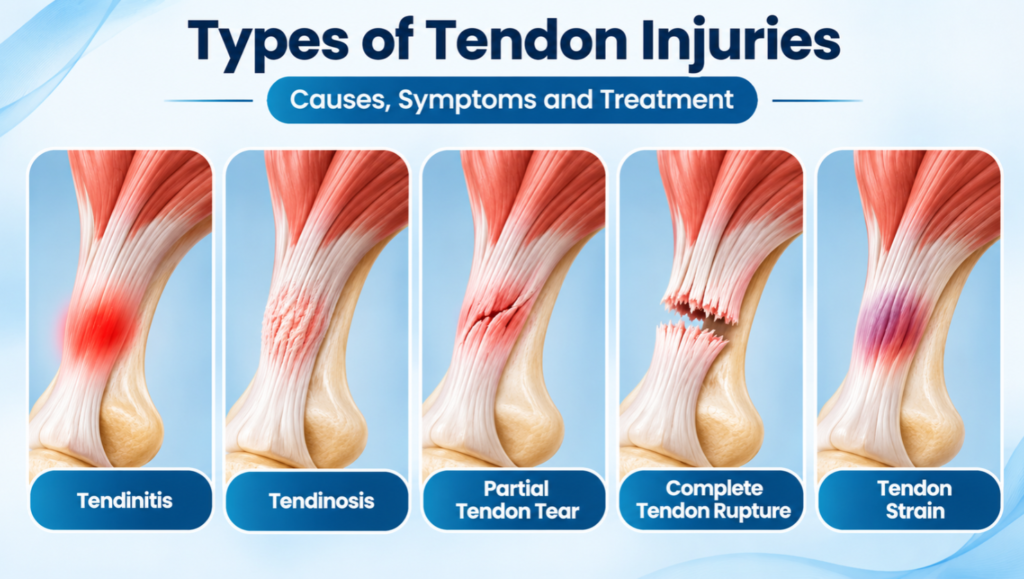
Types of tendon injuries can go from irritation to serious tears that make everyday movement hard. Tendons link muscles to bones. Let us walk, run, lift and bend. Although repetitive movements, sports, sudden injuries and too much strain can harm these tissues. Some tendon injuries get better with rest and physiotherapy, while others need medical care. Knowing the tendon injuries, what causes them, and their symptoms can help you get the right care at the right moment. Dr Arun Jyothi, a specialist in sports medicine and orthobiologic treatments, helps patients understand their tendon injuries and find the treatment options.
What Are Tendon Injuries?
Tendons are flexible tissues that link muscles to bones. They carry the force from muscles to bones, letting body parts move smoothly. When a tendon faces much stress or repeated strain, it can get irritated, inflamed or damaged. Additionally, tendon injuries often hit the shoulders, elbows, knees, ankles and wrists. Hereby, athletes, fitness lovers and people who do work have a higher risk of tendon injuries. Still tendon injuries can affect anyone.
Types of Tendon Injuries You Should Know
Tendon injuries do not always show up the same. Some bring inflammation; some cause tissue degeneration or tearing. Here are five types of tendon injuries.
1. Tendinitis
Tendinitis means a tendon is inflamed or irritated. It usually happens when you repeat movements, exercise hard or suddenly ramp up activity.
Common symptoms include:
- Pain around the tendon.
- Swelling and tenderness.
- Discomfort during movement.
- Stiffness, especially after periods of rest.
- For instance, repeating shoulder moves or running much can raise the risk of tendinitis.
Tendinosis
Tendinosis happens when tendon tissue degenerates because of long-term stress or repeated overuse. Unlike tendinitis, it does not mainly involve inflammation.
Common symptoms include:
- tendon pain.
- Stiffness after inactivity.
- Reduced strength.
- Pain that increases during physical activity.
Early assessment and proper treatment can help manage this and improve tendon function.
Partial Tendon Tear
A partial tendon tear happens when some tendon fibres get damaged or torn while the rest stay connected.
This injury can appear from force, repetitive strain or age-related changes in tendon strength.
Common symptoms include:
- pain and tenderness.
- Swelling around the affected area.
- Muscle weakness.
- Difficulty performing certain movements.
The severity of the tears decides the treatment. So a proper medical assessment is vital.
Complete Tendon Rupture
A complete tendon rupture means the tendon tears fully and separates, breaking the link between muscle and bone.
This injury often happens during moves, sports or accidents.
Common symptoms include:
- severe pain.
- A popping or snapping sensation.
- Swelling and bruising.
- Significant weakness.
- Difficulty moving the body part.
A complete rupture needs medical evaluation. Depending on how bad it is, treatment might include surgery and then rehab.
Tendon Strain
A tendon strain happens when much force stretches or damages tendon fibres. It can occur during lifting, sudden moves or intense activity.
Common symptoms include:
- Pain during movement.
- Mild to swelling.
- Tenderness around the injured area.
- Reduced flexibility and strength.
The strain’s severity can vary. Proper treatment and gradual rehab can bring back movement.
What Causes Tendon Injuries?
Several factors raise tendon injury risk. The common causes are the following:
- Repetitive movements: Performing the same movements repeatedly can put continuous stress on tendons.
- Sports activities: Running, jumping, weightlifting and other intense activities can increase tendon strain.
- Movements: Quick changes in direction or unexpected movements can cause tendon injuries.
- Age-related changes: Tendons may become less flexible and more vulnerable to damage as people age.
- Improper exercise techniques: Incorrect posture or exercise techniques can place unnecessary pressure on tendons.
- Insufficient recovery: Not allowing enough recovery time between physical activities can increase the risk of overuse injuries.
How Are Tendon Injuries Diagnosed?
Accurate diagnosis helps doctors figure out how bad a tendon injury is and suggest a treatment.
Depending on the symptoms, doctors may recommend:
- Physical examination: The doctor checks the area that hurts for pain, swelling, tenderness and limits in movement.
- Ultrasound scan: This scan shows if the tendon is inflamed, torn or if there are tissue problems.
- MRI scan: An MRI gives pictures of soft tissues and shows how severe the tendon injury is.
- X‑ray: X‑rays cannot see tendons well, but they can spot bone injuries that happen with a tendon injury.
Treatment Options for Tendon Injuries
Treatment depends on what kind of tendon injury it is, how bad it is and how active the patient is. That is why doctors make a plan for each patient.
- Rest and Activity Modification
Lowering activities that put much pressure on the injured tendon stops more damage.
- Physiotherapy and Rehabilitation
Physiotherapy makes the tendon more flexible, stronger and easier to move. Controlled exercises also bring back tendon function and help the patient slowly return to everyday tasks.
- Medication
Doctors may suggest the medicine to ease pain and discomfort based on the patient’s condition.
- Orthobiologic Treatments
These treatments, such as Platelet‑Rich Plasma (PRP) therapy, can help some patients with tendon injuries. They use natural body substances to aid healing. They work best for particular types and severities of injury.
- Surgical Treatment
A lot of tendon tears or full ruptures may need surgery to fix the tendon. After surgery, rehabilitation is key to bringing back strength and movement.
When Should You Consult a Doctor?
Do not ignore tendon pain or trouble moving a body part. Call a specialist if you have:
- sharp pain after an injury.
- Swelling or tenderness that stays for a long time.
- Trouble walking, lifting or doing chores.
- Less muscle strength.
- Pain that does not get better with rest.
Early diagnosis stops problems and helps you recover better.

conclusion
Knowing the types of tendon injuries, why they happen and what they feel like helps you know when to see a doctor. From tendinitis to a tendon rupture, every injury needs a fitting treatment plan.
Dr Arun Jyothi, who knows sports medicine and orthobiologic treatments, can guide you in managing tendon injuries and finding the treatment.
Do not let tendon pain stop you from moving or doing tasks. Contact Dr Arun Jyothi now for a check and a treatment plan that fits you. Start moving, recover faster and live an active life