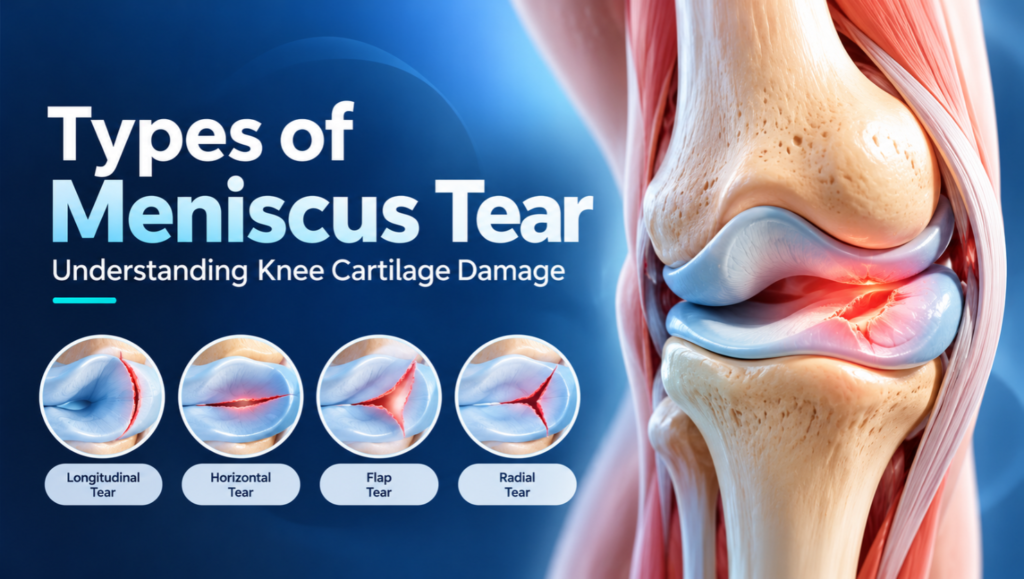
Understanding the types of meniscus tear can help you recognise how different injuries affect the knee and why each tear may require a different approach to care. While some tears respond well to conservative treatment, others may require surgical intervention. Therefore, understanding the nature of the injury is an important step towards protecting your knee health and planning your recovery.
What Is a Meniscus Tear and How Does It Affect Your Knee?
The meniscus is a C-shaped piece of tough, rubbery cartilage inside your knee joint. Each knee has two menisci: the medial meniscus on the inner side and the lateral meniscus on the outer side.
These structures act as cushions between the thighbone (femur) and shinbone (tibia). They absorb shock, distribute body weight, improve joint stability, and protect the joint surfaces during movement.
However, sudden twisting, sports-related injuries, or age-related cartilage changes can cause a tear. Depending on its location and pattern, the injury may cause pain, swelling, stiffness, or restricted knee movement.
What Are the Different Types of Meniscus Tear?
Doctors classify meniscus tears according to their shape, location, and severity. Recognising the different patterns helps explain why some injuries cause mild discomfort while others interfere significantly with knee movement.
1. What Is a Longitudinal Meniscus Tear?
A longitudinal tear runs along the length of the meniscus, following the direction of its fibres. It can occur when the knee twists under pressure, particularly during sports that involve sudden turns or changes in direction.
Some longitudinal tears remain stable, while others can extend or displace. When a tear displaces into the centre of the knee, it may develop into a bucket-handle tear.
Treatment depends on the tear’s location, stability, and severity. Your doctor may recommend activity modification, physiotherapy, or surgical repair when appropriate.
2. How Does a Radial Meniscus Tear Affect the Knee?
A radial tear begins near the inner edge of the meniscus and extends outward across its fibres. Because these fibres help distribute weight across the knee joint, a significant radial tear can reduce the meniscus’s ability to perform this function.
This injury may develop after a sudden twisting movement or alongside degenerative changes in the cartilage.
People with a radial tear may experience pain during weight-bearing activities, swelling, and discomfort when squatting or turning. Depending on the tear’s size and location, the doctor may recommend conservative care or consider surgery to preserve meniscus function.
3. What Happens During a Horizontal Meniscus Tear?
A horizontal tear divides the meniscus into upper and lower layers. It often develops alongside age-related changes in the cartilage, although an injury can also cause this tear pattern.
Some people experience mild discomfort, while others develop persistent pain or swelling after physical activity.
Your doctor will consider your symptoms, activity level, and the condition of the surrounding cartilage before recommending treatment. Conservative care may help selected cases, while persistent symptoms may require further assessment.
4. Why Is a Bucket-Handle Meniscus Tear Different?
A bucket-handle tear is a type of longitudinal tear in which a large fragment of cartilage displaces towards the centre of the knee joint. The displaced fragment resembles the handle of a bucket.
Unlike some stable tears, this injury can interfere with normal knee movement and cause mechanical symptoms.
Common warning signs include sudden pain, swelling, difficulty fully straightening the knee, and a sensation that the joint has locked. If your knee locks or you cannot move it normally, seek prompt medical assessment.
Depending on the injury, an orthopaedic surgeon may recommend arthroscopic surgery to repair the meniscus or address the displaced fragment.
5. What Is a Flap Meniscus Tear?
A flap tear occurs when part of the meniscus becomes partially detached and forms a loose flap of cartilage. This flap may move inside the joint and irritate nearby structures during movement.
As a result, you may experience sharp pain during specific activities, clicking, catching, or swelling after exercise.
Treatment depends on the size and location of the flap and how much it affects knee movement. Your doctor may recommend conservative treatment or consider surgery if the tear causes persistent symptoms.
6. How Does a Complex Meniscus Tear Develop?
A complex tear involves multiple tear patterns within the meniscus. For example, the injury may combine horizontal and radial components.
These tears often develop alongside degenerative cartilage changes, although repeated stress and injuries can also contribute.
Because a complex tear involves more than one pattern, your doctor must assess the overall condition of the knee before choosing a treatment plan. Some people benefit from activity modification and physiotherapy, while others may need surgical assessment.
What Causes Different Types of Meniscus Tear?
Several factors can damage the meniscus. Understanding these causes can help you recognise risky movements and take steps to protect your knees.
1. Sudden Twisting Movements
Quickly turning while your foot remains planted on the ground can place excessive stress on the knee. Consequently, the meniscus may tear during sudden direction changes or awkward landings.
2. Sports-Related Injuries
Football, basketball, badminton, and tennis involve sudden stops, jumps, and changes in direction. These movements can increase the risk of meniscus injuries, especially when the knee twists under pressure.
3. Deep Squatting and Heavy Lifting
Repeated deep squats and heavy lifting can place additional stress on the knee joint. Although these activities do not always cause an injury, poor technique or existing cartilage damage may increase the risk.
4. Age-Related Cartilage Changes
As you age, the meniscus may become less resilient. Therefore, even a relatively minor movement can sometimes cause a tear in cartilage that has already weakened.
5. Previous Knee Injuries
Earlier knee injuries may affect joint stability and movement control. Proper rehabilitation can help restore strength and support a safer return to physical activity.
What Signs May Indicate a Meniscus Injury?
Meniscus tears can cause different symptoms depending on their pattern and severity. However, the following signs commonly indicate a knee problem that needs assessment:
- Knee pain: You may feel pain along the inner or outer edge of the joint.
- Swelling: Your knee may swell within hours or over the following days.
- Stiffness: Bending or straightening the knee may become uncomfortable.
- Clicking or catching: You may feel something catch inside the joint during movement.
- Restricted movement: A displaced tear may prevent you from fully straightening your knee.
- Instability: Your knee may feel as though it could give way.
However, these symptoms can also occur with ligament injuries and other knee conditions. Therefore, seek medical advice for an accurate diagnosis, particularly if the pain persists or interferes with daily activities.
How Do Doctors Identify the Types of Meniscus Tear?
An accurate diagnosis helps your doctor understand the injury and recommend suitable care.
First, your doctor will ask how the injury happened, where you feel pain, and whether you have noticed swelling or restricted movement. Next, they will examine your knee and perform appropriate clinical tests.
Your doctor may also recommend imaging when necessary.
- MRI scan: This can help identify the location and pattern of a meniscus tear and assess associated soft-tissue injuries.
- X-ray: Although an X-ray does not show the meniscus directly, it can help identify bone injuries or signs of arthritis.
Your doctor will consider the examination findings, symptoms, and imaging results together before making a diagnosis.
Which Treatment Options Can Help a Meniscus Tear?
Treatment depends on the tear’s pattern, size, location, symptoms, and your activity goals. Importantly, not every meniscus tear requires surgery.
1. Conservative Treatment
For suitable tears, your doctor may recommend temporary activity modification, ice application, and appropriate pain-relief medication. These measures can help manage symptoms while the knee recovers.
2. Physiotherapy and Rehabilitation
Physiotherapy can improve knee mobility, strengthen the surrounding muscles, and restore balance and movement control. A physiotherapist will tailor exercises to your injury and gradually increase activity as your knee improves.
However, avoid exercises that increase pain, swelling, or catching. Follow professional guidance to reduce the risk of aggravating the injury.
3. Arthroscopic Meniscus Surgery
When a tear causes persistent symptoms, significant mechanical problems, or other complications, an orthopaedic surgeon may consider arthroscopic surgery.
Depending on the injury, the surgeon may repair the torn meniscus or remove only the damaged portion when repair is not suitable. Whenever possible, preserving meniscus tissue is important because it helps maintain knee function and protect the joint.
Your surgeon will explain the potential benefits, risks, and expected recovery time before recommending a procedure.
How Long Does Meniscus Tear Recovery Take?
Recovery varies according to the tear’s pattern, severity, treatment approach, and your overall knee health.
Some people improve within several weeks with conservative care. However, meniscus repair often requires a longer recovery period because the cartilage needs time to heal. Recovery after partial meniscectomy may progress faster, although individual results vary.
To support your recovery, follow your rehabilitation programme, attend follow-up appointments, and increase physical activity gradually. Most importantly, return to sports only when your healthcare team confirms that your knee strength, mobility, and function are appropriate.
Conclusion: Understand Your Meniscus Tear and Protect Your Knee Health
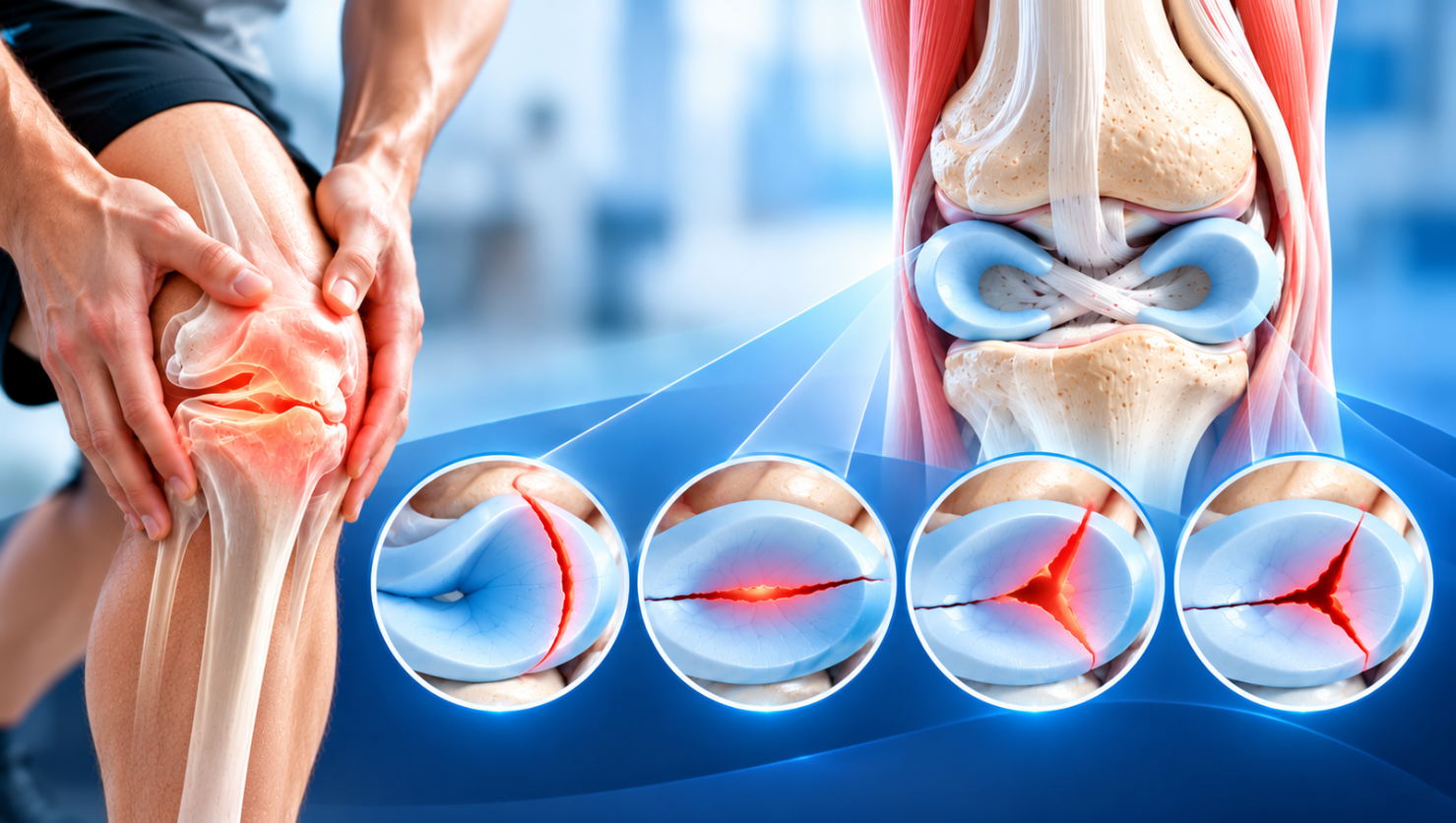
Understanding the types of meniscus tear helps you recognise why knee injuries can produce different symptoms and require different treatment approaches. Longitudinal, radial, horizontal, bucket-handle, flap, and complex tears each have distinct characteristics, so an accurate diagnosis remains essential.
With appropriate medical assessment and a personalised recovery plan, many people can improve knee function and return to their usual activities. However, some injuries require surgery, particularly when a displaced fragment causes locking or symptoms persist despite conservative care.
If knee pain is affecting your mobility or athletic performance, take the next step towards recovery. Consult Dr. Arun Jyothi to discuss your knee concerns, diagnosis, and suitable treatment options. For people looking for the best sports medicine doctor in Trivandrum, a professional assessment can help clarify the injury and guide decisions about recovery.
Don’t let knee pain keep you away from the activities you love. Book a consultation with Dr. Arun Jyothi today and take the first step towards better knee health and confident movement.