Meniscus injury treatment focuses on relieving pain, improving knee movement, and helping you return to your daily activities safely. However, the right treatment depends on the type of tear, its severity, your symptoms, and your overall knee health. Understanding the causes and warning signs can help you take the right steps towards recovery.
What Is a Meniscus Injury?
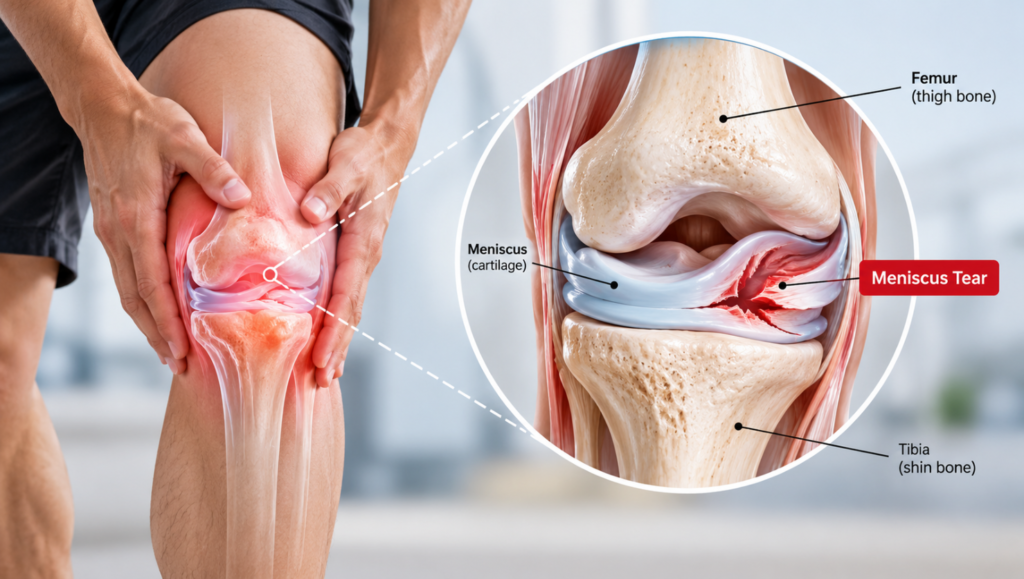
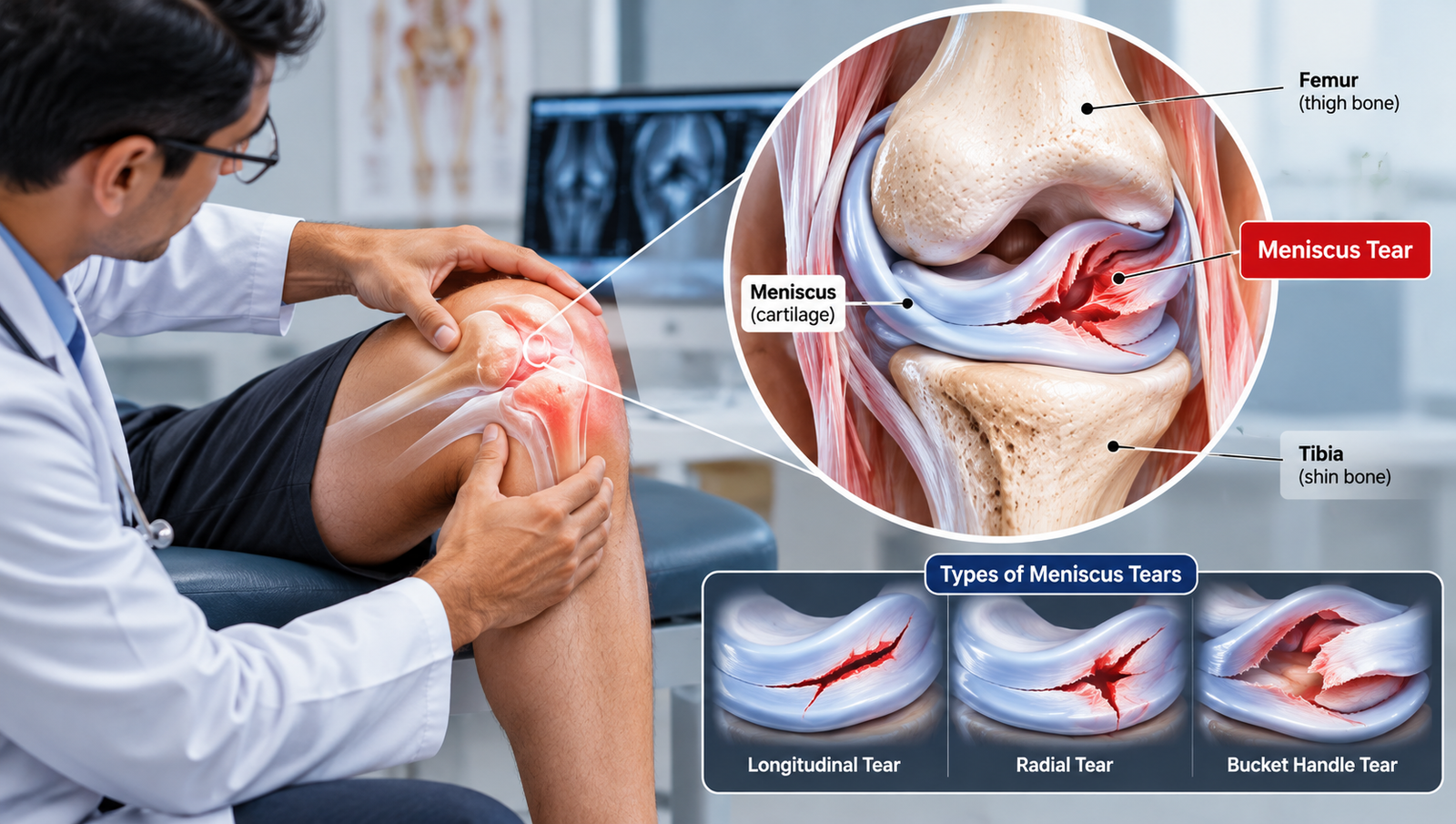
The meniscus is a C-shaped piece of tough, rubbery cartilage inside your knee joint. Each knee has two menisci: one on the inner side and another on the outer side. These structures act as cushions between your thighbone (femur) and shinbone (tibia).
They absorb shock, distribute body weight, improve joint stability, and protect the bones from excessive stress. However, a sudden twist or repeated strain can tear this cartilage.
A meniscus tear can occur during sports, exercise, or everyday activities. While younger people often experience these injuries during sudden movements, age-related changes can make the meniscus more vulnerable to tears over time.
What Causes a Meniscus Tear?
Several factors can damage the meniscus. Identifying the cause helps your healthcare professional determine the most suitable treatment approach.
1. Sudden Twisting Movements
Quickly changing direction while running, turning, or playing football can twist the knee under pressure. As a result, the meniscus may tear, especially when the foot remains planted on the ground.
2. Sports-Related Injuries
Sports such as football, basketball, badminton, and tennis involve sudden stops, jumps, and direction changes. These movements increase the risk of knee injuries, particularly when you do not control the landing or twisting movement properly.
3. Heavy Lifting and Deep Squatting
Lifting heavy objects or repeatedly performing deep squats can place additional stress on the knee joint. When you combine these movements with poor technique or an existing knee problem, you may increase your risk of injury.
4. Age-Related Wear and Tear
As you grow older, the meniscus can become weaker and less flexible. Consequently, even a simple movement, such as standing up from a deep squat, may cause a tear in cartilage that has already weakened.
5. Previous Knee Injuries
An earlier knee injury or ongoing joint instability may increase the likelihood of further damage. Therefore, proper assessment and rehabilitation play an important role in protecting knee function.
Common Symptoms of a Meniscus Injury
Meniscus injuries do not always cause immediate pain. Some people notice symptoms within a few hours, while others experience discomfort gradually. Watch for these common warning signs.
- Knee pain: You may feel pain along the inner or outer edge of your knee, especially when twisting or bending it.
- Swelling and stiffness: Your knee may become swollen and feel stiff, making everyday movements uncomfortable.
- Clicking or catching: You might notice a clicking sensation or feel as though something catches inside the joint.
- Difficulty bending or straightening: A tear may limit your knee’s range of motion.
- Feeling of instability: Your knee may feel as though it could give way while walking or standing.
- Difficulty bearing weight: Pain and swelling can make walking or climbing stairs more challenging.
However, these symptoms can also occur with other knee conditions, including ligament injuries. Seek medical advice for an accurate diagnosis. If you cannot bear weight, your knee locks, or you develop severe pain or swelling after an injury, seek prompt medical assessment.
Meniscus Injury Treatment: What Are Your Options?
The right treatment can help reduce symptoms, restore movement, and protect your knee function. Your doctor will consider the location and size of the tear, your activity level, and whether you have other knee injuries before recommending a treatment plan.
1. Rest and Activity Modification
First, reduce activities that worsen your symptoms. Avoid painful twisting movements, deep squats, running, and high-impact exercise until a healthcare professional advises you to resume them.
You can also apply an ice pack wrapped in a towel for short periods to help manage swelling. Avoid placing ice directly on your skin.
2. Medication and Medical Assessment
Your doctor may recommend suitable pain-relief medication after reviewing your medical history and other health considerations. Do not rely on painkillers alone, as they may relieve discomfort without addressing the underlying injury.
Depending on your symptoms and examination findings, your doctor may recommend imaging, such as an MRI, to assess the meniscus and identify associated damage.
3. Physiotherapy and Rehabilitation
Physiotherapy can play an important role in recovery, particularly for meniscus tears that do not require surgery. A physiotherapist may design an individualised programme to improve knee mobility, strengthen the muscles around the joint, and restore balance and control.
As your symptoms improve, your programme may gradually include:
- Gentle knee range-of-motion exercises.
- Quadriceps and hamstring strengthening.
- Hip and leg stability exercises.
- Balance and movement-control training.
- Gradual return to walking, exercise, and sports.
Nevertheless, not every exercise suits every tear. Follow a professional’s guidance and avoid movements that increase pain, swelling, or catching.
4. Surgical Treatment When Necessary
Some meniscus tears may require surgery, particularly when symptoms persist despite appropriate conservative treatment or when the tear causes significant mechanical problems.
Depending on the injury, an orthopaedic surgeon may recommend arthroscopic meniscus repair or partial meniscectomy, in which the damaged portion is removed. Whenever appropriate, preserving the meniscus is an important consideration because it helps protect the knee joint.
Your surgeon will explain the potential benefits, risks, and recovery expectations before recommending a procedure.
How Long Does Meniscus Injury Recovery Take?
Recovery time varies according to the type of tear, its severity, the treatment you receive, and your overall health.
Minor injuries may improve over several weeks with appropriate care. However, more complex tears may take longer, and recovery after surgery can require several months.
For example, rehabilitation after a partial meniscectomy often progresses faster than recovery after meniscus repair. A repaired meniscus needs time to heal, so your surgeon may restrict certain movements and weight-bearing activities during the early stages.
To support your recovery, follow your rehabilitation plan consistently, increase activity gradually, and attend your scheduled follow-up appointments. Most importantly, do not return to sports simply because your pain has reduced. Make sure your knee strength, movement, and function meet the requirements of your chosen activity.
Can You Prevent a Meniscus Injury?
Although you cannot prevent every knee injury, a few practical habits can reduce avoidable strain.
- Warm up before exercise or sports.
- Strengthen your quadriceps, hamstrings, and hip muscles.
- Use proper technique when lifting weights or performing squats.
- Increase your exercise intensity gradually.
- Wear suitable footwear for your activity.
- Avoid sudden twisting movements when your knee feels painful or unstable.
These habits help support knee health and improve movement control. If you have experienced a previous knee injury, ask your healthcare professional how to return to physical activity safely.
Conclusion: Take the Right Steps Towards Knee Recovery
Knee pain should not prevent you from enjoying your daily activities. By recognising the symptoms early and seeking the right care, you can better understand your injury and make informed decisions about recovery.
Meniscus injury treatment may involve activity modification, medication, physiotherapy, or surgery, depending on the nature of the tear. Early assessment and an appropriate rehabilitation plan can help you regain movement and return to your routine safely.
A meniscus injury treatment is essential for one who is affected by severe knee pain; consult an orthopaedic specialist for an individual assessment. If you are searching for the best orthopaedic doctor for your knee concerns, consider consulting Dr Arun Jyothi to discuss your symptoms and suitable treatment options.
Don’t let knee pain hold you back. Book a consultation with Dr Arun Jyothi and take the first step towards better knee health and confident movement.